
Manage.Camp logo Manage.Camp
Resources Operator Stories

Operator Story

From Spreadsheets and Emails to a Reservation System That the Whole Team Can Use

This is an anonymized account of a campground operator who moved from manual booking management to Manage.Camp. The campground details have been generalized, but the workflow problems and outcomes are based on real onboarding experience.

Operator and campground details have been anonymized. Outcome descriptions reflect the general pattern observed during onboarding, not a specific named reference.

The Campground

A family-operated campground in Central Europe. Approximately 45 mixed units including pitches, glamping pods, and mobile homes. Two full-season staff, one reception role, and an owner who handled most bookings personally during off-season. The campground had been operating for eight years, almost entirely on spreadsheets and email.

Before: What the System Looked Like

Booking intake

Reservations came in by phone, email, and a booking platform. Each channel was handled separately. Phone bookings were written on paper and entered into a shared spreadsheet the same day — unless the owner was busy, in which case entry happened the next morning.

Availability tracking

The spreadsheet was the source of truth for availability. Staff on reception checked it at the start of each shift. There was no lock on the file, so concurrent edits caused occasional overwritten entries. Two double-bookings occurred in the 18 months before switching.

Pricing

Seasonal rates were in a separate tab. Extra-person charges, tourism tax, and cleaning fees were listed in a reference document that staff were expected to memorize. Inconsistencies in how fees were applied came up in guest feedback roughly once per month.

Reporting

End-of-season reporting was a manual exercise that took two to three days. The owner extracted data from the booking spreadsheet and built a summary in a separate file. Year-on-year comparison required finding and reconciling two years' spreadsheets.

What Triggered the Switch

The second double-booking of the season was the final trigger — a group of six who had a confirmed reservation arrived to find their unit already occupied. The resolution cost the campground a complimentary night for both parties and significant goodwill. After that incident, the owner began evaluating dedicated software.

Implementation

Unit import

The unit list was cleaned up first — removing duplicates, standardizing names, and assigning type categories. Import took one afternoon. The owner described this as the most valuable part of the exercise because it forced a review of the unit structure that had not been done in years.

Pricing rules

Seasonal rates, minimum stays, and extra fees were configured in Manage.Camp using the pricing rule interface. The owner used the CSV import for base rates and entered seasonal overrides manually. Total setup time was approximately six hours across two days.

Open reservation migration

Only current-season bookings were migrated — approximately 60 reservations. Historical data was retained in the old spreadsheet as an archive. Migration took half a working day.

Staff handover

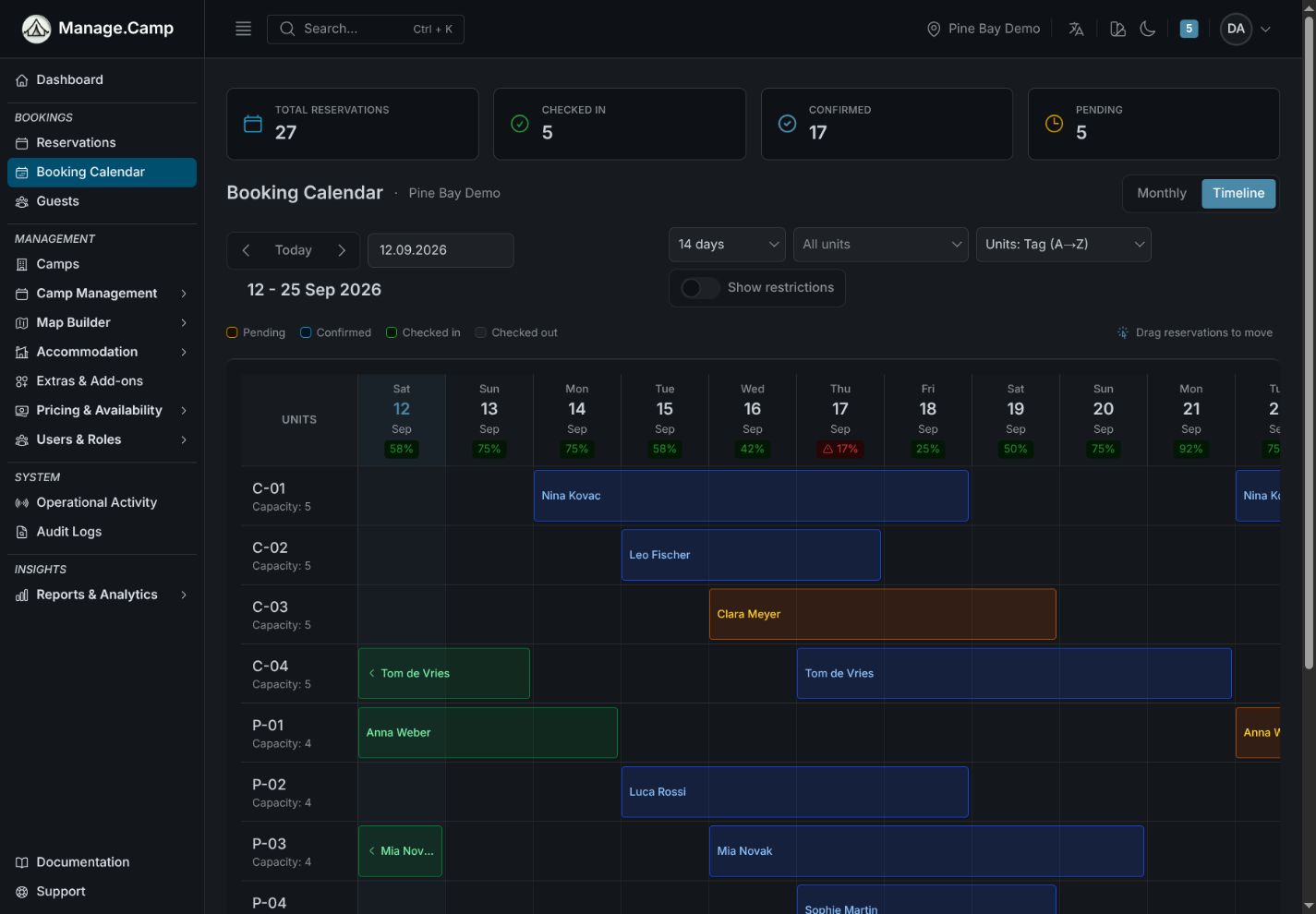
Reception staff were shown the reservation timeline and booking flow during a 2-hour walkthrough. They were asked to create five test reservations and cancel two before the go-live date. No formal training materials were needed.

After: What Changed

No double-bookings reported after switching

Conflict-detection at booking time addressed the category of error that had caused the previous incidents. Staff no longer needed to cross-check a spreadsheet before confirming a unit.

More consistent pricing

Fee-related guest complaints were no longer a recurring issue. Staff no longer needed to remember fee rules — the system calculated them at booking time.

Faster end-of-season reporting

The manual spreadsheet exercise that had previously taken days was replaced with built-in occupancy and revenue reports. The operator described this as one of the most immediate improvements.

Less owner involvement in daily bookings

Staff handled reservations, cancellations, and guest changes with less need to involve the owner for routine queries. The operator noted a meaningful reduction in daily interruptions during peak season.

What Was Harder Than Expected

  • The unit naming cleanup took longer than anticipated. Years of informal naming conventions had to be resolved before import. This was valuable work, but it was not a one-hour task.
  • One staff member initially found the reservation timeline unfamiliar compared to the spreadsheet view they had used for years. After two weeks of daily use, this resolved on its own.
  • The old spreadsheet stayed in use informally for about two weeks after go-live before the owner enforced a clean cutover. A clear "this is the only source of truth now" decision on day one would have been faster.

A Similar Situation?

If this account resembles your current setup, a short conversation about unit count, intake channels, and season structure is the fastest way to assess whether the switch makes sense for your campground.